
The Real Production Benefits of Working With a Contract Manufacturer in Medical Manufacturing
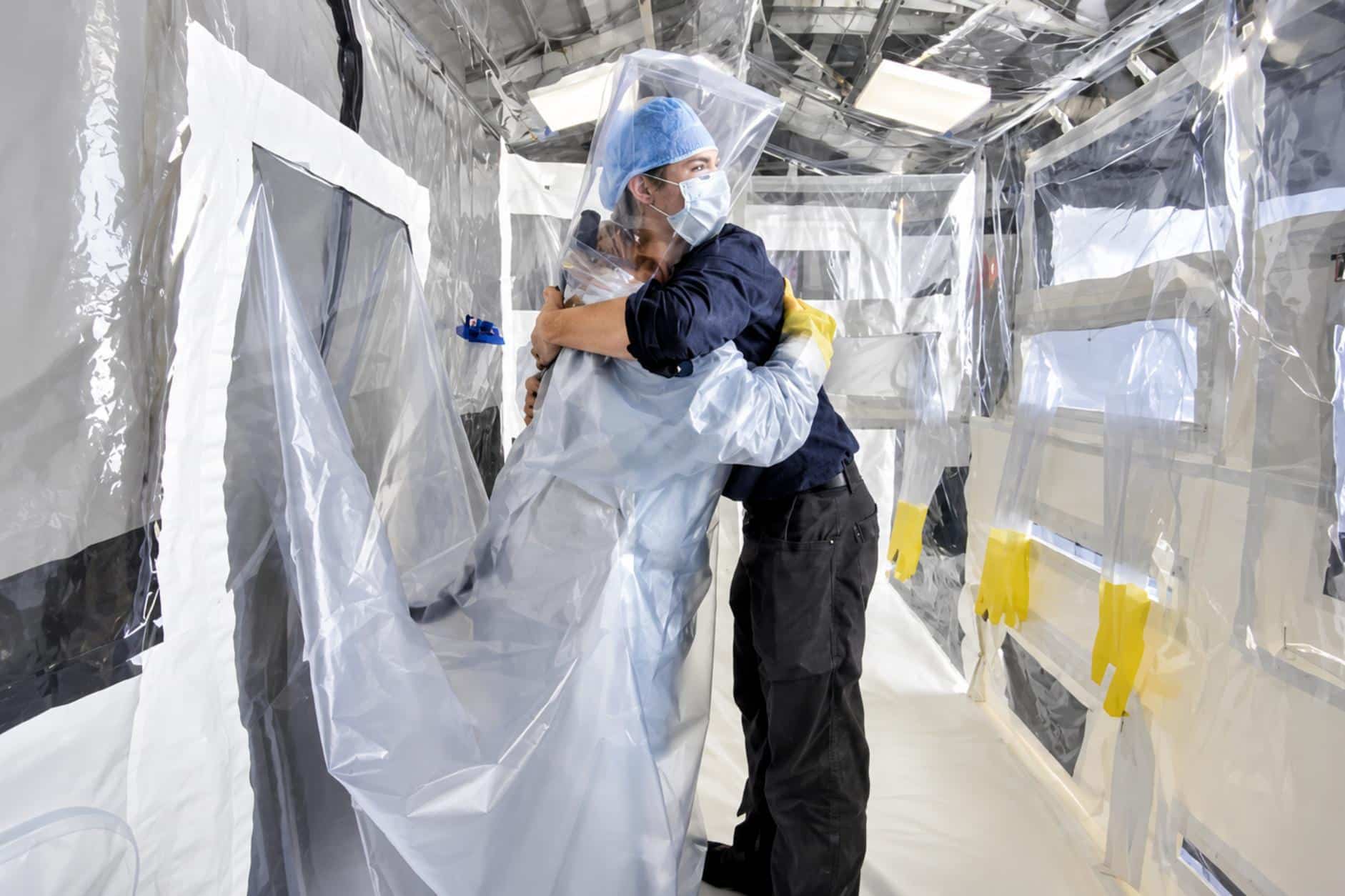
Table of Contents
- Introduction
- What Is Contract Manufacturing for Medical Devices?
- How Does Contract Manufacturing Speed Up Medical Product Lead Times?
- Why Do Medical OEMs Outsource Production to Contract Manufacturers?
- What Quality and Compliance Standards Should a Medical Contract Manufacturer Meet?
- What Materials and Processes Go Into Medical Soft Goods Manufacturing?
- How Does Contract Manufacturing Handle Scaling for Medical Emergencies?
- What Should Medical Device Companies Look for in a Contract Manufacturing Partner?
- Build Your Custom Medical Device or Soft Good With Vinyl Technology
- Key Takeaways
Medical manufacturing products are highly specialized goods that sometimes require rapid production turnaround. A hospital needs a hundred isolation tents built in weeks, not months. A device company needs a positioning cushion redesigned three times before a clinical trial starts. Neither of those problems is solved by adding staff to an in-house sewing room. They are solved by handing the fabrication over to a shop that already does this work every day.
What Is Contract Manufacturing for Medical Devices?
Contract manufacturing is when a specialized production company builds medical devices or soft goods on behalf of an original equipment manufacturer (OEM). The OEM keeps ownership of the design and the brand. The manufacturer handles material selection, fabrication, testing and final assembly. That split lets an OEM put its energy into research, clinical work, regulatory filings and product development instead of running a factory floor.
Some medical contract manufacturers only assemble parts someone else engineered. Others go further and bring engineering, tooling, and quality testing into the process from day one. Full-service end-to-end medical contract manufacturers are always the ones worth calling first. The products at stake range wider than people expect: vac-lock positioning cushions, compression garments, isolation room canopies, inflatable bladders, mattress overlays and hospital headpieces for trauma patients.
How Does Contract Manufacturing Speed Up Medical Product Lead Times?
RF welding and industrial sewing need little to no hard tooling compared to injection molding. That’s not a small distinction. A vac-lock cushion changes its bead fill or valve position, and a soft goods manufacturer adjusts the weld pattern without ordering a new mold. An injection-molded part with the same change waits weeks for tooling before anyone sees a working sample.
That speed was crucial during the COVID-19 pandemic, when hospitals needed negative-pressure isolation rooms fast. Vinyl Technology built temporary tents with RF-welded seams, glove walls, and HEPA-filtered air handling, and did it on a timeline that a hard-tooled process could never have matched.
Why Do Medical OEMs Outsource Production to Contract Manufacturers?
Running an in-house RF welding line or industrial sewing floor costs money whether it’s busy or idle. Equipment, floor space, trained operators, and maintenance contracts all remain fixed regardless of order volume. A contract relationship turns that fixed cost into a variable one. Production scales up for a big order and scales down between them, without a company carrying idle machines on its books all year.
That arrangement also frees the OEM’s own team to spend its hours on research and regulatory submissions rather than production scheduling. This is one of the reasons companies keep choosing medical contract manufacturers over building a parallel factory of their own.
What Quality and Compliance Standards Should a Medical Contract Manufacturer Meet?
Certifications aren’t paperwork for its own sake. An FDA-registered facility, ISO 9001:2015, AS9100D quality systems, and an ongoing quality assurance and reliability testing program mean a manufacturer has a repeatable process behind not just a good prototype, but every single unit. This is imperative for something like a compression garment or mattress overlay, where seam strength and material traceability need to hold up the same way on unit one and unit 1,000.
Government-adjacent standards count too. NIST 800-171 compliance, ITAR registration, Berry Amendment capability and DFARS compliance demonstrate a level of process discipline that carries over into commercial medical work, even for a company that never touches a defense contract.
What Materials and Processes Go Into Medical Soft Goods Manufacturing?
RF welding, also called dielectric sealing, joins vinyl and TPU films into seams that finish cleanly and resist the kind of wear a hospital environment puts on a product. Industrial sewing handles fabric-based products, like compression garments and restraint systems, where stitched construction does a better job than a welded seam.
A shop that runs both processes under one roof skips the handoff problems that come with splitting a single product across two vendors. One team, one timeline, one point of accountability, one finished product.
How Does Contract Manufacturing Handle Scaling for Medical Emergencies?
Isolation room tents remain the clearest example of scaling under pressure. Building at volume during a surge meant sourcing material fast, integrating HEPA and MERV filters directly into the tent canopy, and assembling glove walls without slowing the line down. None of that required new tooling investment, because the underlying RF welding process was already built to flex.
A manufacturer locked into long tooling lead times can’t respond to that kind of demand spike. A manufacturer built around welding and sewing is up to the task.
What Should Medical Device Companies Look for in a Contract Manufacturing Partner?
Engineering support from concept through fabrication matters more than a shop that only executes a finished spec handed to it. A track record across regulated industries, domestic production, and material traceability round out the list. Some medical contract manufacturers just fill an order and move on, but those worth a long-term relationship reflect their accolades.
Build Your Custom Medical Device or Soft Good With Vinyl Technology
Vinyl Technology has manufactured custom medical soft goods since 1981, from vac-lock positioning cushions and compression garments to isolation room tents and inflatable bladders. Our RF welding and industrial sewing processes, engineering support, and FDA-registered, ISO 9001:2015, AS9100D-certified quality systems and decades of medical soft goods manufacturing experience back every custom medical product we build. If your team needs a manufacturing partner for a medical device or soft goods project, contact Vinyl Technology today to discuss your specifications.
Key Takeaways
- Medical contract manufacturers handle material selection, fabrication, testing, and final assembly, freeing OEMs to focus on research, clinical work, and regulatory filings
- RF welding and industrial sewing need little to no hard tooling, which shortens lead times compared to injection-molded processes
- Outsourcing production turns fixed in-house costs (equipment, floor space, labor) into variable costs that scale with order volume
- Look for certifications like FDA registration, ISO 9001:2015, and AS9100D as proof of a repeatable, quality-controlled process
- Government-adjacent compliance (NIST 800-171, ITAR, DFARS, Berry Amendment) signals a higher level of process discipline, even for non-defense work
- A single manufacturer running both RF welding and industrial sewing avoids handoff issues between separate vendors
- Isolation room tents built during COVID-19 show how a tooling-light process scales fast during demand surges
- The strongest medical contract manufacturing partners offer engineering support from concept through fabrication, not just execution of a finished spec

Article Reviewed For Accuracy By: Jackie Sanchez, VP of Sales Operations
Jackie Sanchez is the VP of Sales Operations at Vinyl Technology.
Jackie became a VP in 2021 following over four years of service as our Director of Human Resources. Her leadership competencies include human resources capacity, ethical conduct, strategic thinking, decision making, and financial management.
She holds an undergraduate degree from Chapman University. Follow her on LinkedIn.