
Why Industrial Sewing and RF Sealing Are Essential for Reliable Mil-Spec Gear
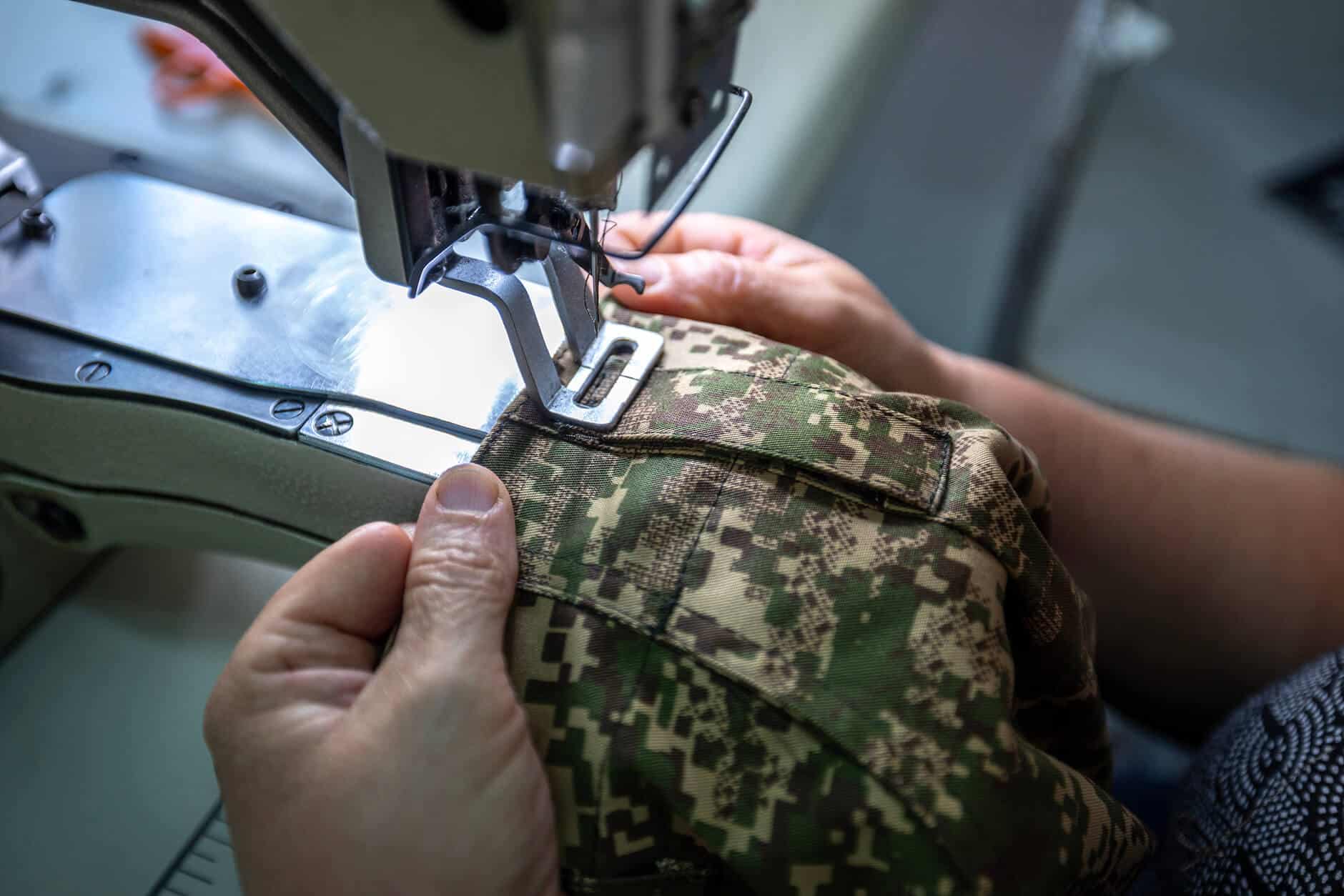
Table of Contents
- Mil-Spec Gear is Built For Extreme Conditions
- Where the Load Goes in Industrial Sewing
- RF Sealing to Prevent Air, Water, and Fuel Contamination
- Two Processes on the Same Product
- Why Outsource to Vinyl Technology
- Key Takeaways
Mil-Spec Gear is Built For Extreme Conditions
Mil-spec gear takes a beating that would tear apart most consumer products within minutes. Salt spray off a Pacific coastline, sub-zero air at altitude, jet fuel splashes on a flight deck, decontamination chemicals after a chemical exposure event, and the kind of abrasion that comes from dragging a loaded plate carrier across concrete for hours.
It is important to define the term “mil-spec” by examining the standards behind it, as MIL-STD-810 environmental testing, MIL-DTL material callouts, and performance-driven contract requirements demand real construction behind every seam and panel.
Industrial sewing and RF sealing, sometimes called dielectric welding or radio frequency welding, are the two manufacturing processes that carry most of that load. Both methods show up on serious gear, often on the same piece of equipment, and getting either one wrong tends to be the kind of mistake that surfaces in the field rather than the warehouse.
Where the Load Goes in Industrial Sewing
Thread selection builds the foundation for the entire industrial sewing process. Bonded nylon handles most plate carrier and pack work because it resists abrasion and holds up under repeated flexing. Kevlar steps in for heat-exposed seams or anywhere flame resistance is part of the contract, though it costs more and behaves differently under a sewing foot. Polyester wins for UV-exposed exterior work because it maintains its tensile strength in sunlight, whereas nylon degrades over months. Melting points count more than people expect, as a thread that softens around 400°F becomes a liability on gear that might brush hot brass or vehicle exhaust.
Stitch density and stitch type carry equal weight. Bar tacks anchor the high-stress points: sling loops, drag handles, grab tabs, and any spot where sudden load tries to peel a seam open. PALS webbing on a carrier gets box-X stitches at every 1″ interval, and the contract spec actually defines stitch count per inch. Double-needle lockstitch holds large fabric panels together on packs and shelters where redundancy across a long seam keeps the whole assembly honest.
It is important to note that a single weak bar tack on a sling loop can take down a $400 plate carrier the first time someone drops to a knee under real load. Operators with serious bench time read a pattern the way a machinist reads a print. Every callout has a reason behind it, and shortcuts always surface later on the test bench or out in the field.
Webbing and hardware run on their own specs. MIL-W-17337 covers 1″ tubular nylon for parachute and load-bearing use; MIL-W-43668 covers 1″ plain-weave nylon for general gear. Rated hardware must match the webbing; otherwise, the weakest piece sets the failure point. Hand-finishing earns its place too: grommet setting, hook-and-loop edge tucking, edge binding, and corner reinforcement on a plate carrier all need an experienced eye to come out clean.
Start a Project Request A Quote
RF Sealing to Prevent Air, Water, and Fuel Contamination
Radio frequency welding works on a principle that sounds more complex than it actually is in practice. A high-frequency electromagnetic field (usually 27.12 MHz) passes through two layers of compatible thermoplastic, and the polar molecules inside the material, PVC, polyurethane, TPU, and a handful of others, start oscillating fast enough to generate heat from the inside out.
Pressure from the die holds the layers together while that molecular agitation bonds them at the chain level. The result is a seam that’s effectively a continuation of the parent material rather than two pieces glued or stitched into proximity.
This method beats stitching anywhere where a hermetic or watertight seal is required. A sewn seam has needle holes running through it every few millimeters, & every one of those holes is a potential path for air, water, fuel, or contaminants. A clean RF weld has none. That distinction drives most of the real applications you see in mil-spec gear work: collapsible fuel bladders that have to hold JP-8 for months, potable water storage for forward operating bases, NBC protective suits where a single pinhole defeats the whole garment, decontamination shelters, inflatable decoys, flotation collars on water survival gear, & sealed equipment cases for sensitive electronics that ride in vehicles or get airdropped.
Material compatibility decides whether RF is the right selection. PVC welds beautifully, polyurethane welds well with the right setup, TPU depends on the formulation, and materials like polyethylene or polypropylene don’t respond to RF energy at all, as they require heat sealing or impulse welding instead. An experienced operator knows the difference before the material ever hits the press.
Tooling stays relatively minimal compared to injection molding or thermoforming, which keeps prototype cycles tight and lets a contract shop turn revisions around in days rather than weeks. Getting a clean weld on a fuel-resistant urethane is its own kind of art. Temperature, dwell time, and pressure all have to land together on the same cycle, and a press that’s tuned for one polymer batch might need adjustment on the next roll of material.
Two Processes on the Same Product
Plenty of mil-spec gear lives at the intersection of these two methods. A hydration carrier houses a welded TPU or polyurethane bladder on the inside, wrapped in a sewn Cordura sleeve with PALS webbing, a drag handle and shoulder-strap routing on the outside. Personal flotation devices follow the same logic as the welded bladder holds air, and the sewn harness assembly with rated buckles holds the operator.
Field-deployable shelters use welded fabric panels for the weather-tight skin and rely on sewn corner reinforcements, door zipper assemblies, and tie-down loops for structural load points. Medical evacuation litters often combine a welded waterproof liner with sewn carry handles, edge binding, and patient restraint straps.
A manufacturer running only one process can’t deliver the whole product, and that’s the part that’s typically undersold. The shop has to switch between RF presses and industrial sewing machines on the same job, train operators across both disciplines, and quality-check two completely different seam types on the same finished piece.
This can be more difficult than it sounds, as your inspection criteria for a welded seam involve peel tests and pressure holds, whereas your inspection of a sewn seam looks at stitch density, thread tension, and tack placement. Two skill sets, two QC protocols, one product going out the door.
Why Outsource to Vinyl Technology
Building RF welding and industrial sewing capabilities in-house gets expensive fast. RF welding presses run six figures before tooling, and industrial sewing machines and the supporting equipment add to that.
Lead times tell the other half of the story. Tooling stays light for RF and sewing, so a contract shop can move from drawing to prototype to production in a fraction of the time it takes a captive operation to spin up. On the floor of a shop that runs this work daily, quality control is baked into the daily workflow.
At Vinyl Technology, we’ve spent decades on RF welding and custom industrial sewing for mil-spec gear contract work, and we’d welcome the chance to quote your next project. Contact us to talk through custom RF welding, dielectric sealing, or industrial sewing requirements.
Start a Project Request A Quote
Key Takeaways
- Mil-spec gear faces conditions that destroy consumer products. Salt spray, sub-zero air, jet fuel, and heavy abrasion are routine, which is why MIL-STD-810 and MIL-DTL standards exist.
- Industrial sewing carries the structural load. Thread choice, stitch density, stitch type, and properly spec’d webbing all decide whether gear holds up under real use.
- One weak bar tack can ruin a $400 carrier. Quality lives at the seam, and experienced operators read a pattern like a machinist reads a print.
- RF welding seals where sewing can’t. Welded seams have no needle holes, which is why fuel bladders, NBC suits, and water storage rely on the process.
- Material compatibility decides if RF is the right call. PVC and polyurethane weld well, while polyethylene and polypropylene need heat or impulse sealing instead.
- Most serious mil-spec gear uses both processes. Hydration carriers, PFDs, shelters, and litters combine welded waterproof parts with sewn structural assemblies.
- One-process shops can’t deliver the whole product. Two machine types, two skill sets, and two QC protocols have to run side by side.
- Outsourcing beats building in-house. Equipment runs six figures, operator training takes years, and a specialist shop turns work around faster.

Article Reviewed For Accuracy By: Jackie Sanchez, VP of Sales Operations
Jackie Sanchez is the VP of Sales Operations at Vinyl Technology.
Jackie became a VP in 2021 following over four years of service as our Director of Human Resources. Her leadership competencies include human resources capacity, ethical conduct, strategic thinking, decision making, and financial management.
She holds an undergraduate degree from Chapman University. Follow her on LinkedIn.